Sunday, 10 June 2012

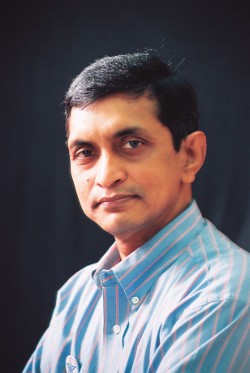
Prof Jayashankar Speeches: Collection of Many Invaluable Messages

My Tribute to Professor Kothapalli Jayashankar, marking his 1st death anniversary. I have recollected many of his invaluable speeches, messages and memories, and created a video playlist. It has total 6 hours footage, starting from 2001 to till his last message in 2011, and in Telugu, English and Urdu languages.

By remaining bachelor all his life, he sacrificed his life for the society, acted like a messenger between three generations (1955 - 2011) and inspired millions of people. I personally feel lucky and honor to meet Prof. Jayashankar few times and listen to his speeches on public forums, and indeed have made a structural change in my personal life.

Please spread his invaluable words and one among them to quote here: "If the educated classes are silent on social issues and indifferent to the people's problems, then the situation will be worse than the terrorism"

Below is the playlist of videos:


You can also embed the playlist and you can find the code at:

http://www.youtube.com/playlist?list=PL4F010D3223EDD045


Brief Biography of Prof. Jayashankar  

Kothapalli Jayashankar popularly known as Professor Jayashankar (6 August 1934 -- 21 June 2011) was an Indian academic and politician. He was the ideologue of Telangana movement. He has been fighting for a separate state since 1952. He was the former Vice Chancellor of Kakatiya University and an activist in the Separate Telangana Movement.

K. Jayashankar was born in Akkampet village, Atmakur mandal, Warangal in erstwhile Hyderabad state to Lakshmikantha Rao and Mahalakshmi. He did his schooling in Hanamkonda, Warangal and his M.A. in Economics at Banaras Hindu University, M.A. in Economics at Aligarh University and Ph.D. in Economics at Osmania University, and B.Ed. at Osmania University.

During the Nizam rule in Hyderabad state, it was mandatory for all schools to sing a song praising the Nizam, when the headmaster of the Markaji High School in Hanamkonda asked his students to sing the song, K. Jayashankar, then a Class VI student, defied the rule and sang Vandemataram. His biography "voduvani muchchata" written by kompelli venkat goud. released by kcr and prominent personalities.

As a young student of intermediate, he walked out of his class in protest against state reorganization in 1952. Then, in 1962, he was part of a campaign which rocked the region. He joined the movement for a separate Telangana state in 1952, when he was a student leader.

As a lecturer, in 1968, he participated in the revived the agitation. He carried out his struggle for Telangana through research and academic studies, and by educating people on the cause. He is known as the original Telangana ideologue. He led several agitations since 1962, transforming into a mass movement after 1969 agitation.

He was associated with the Telangana movement efforts to obtain statehood for Telangana since 1952, stating with Non-Mulki go back and Idli Sambar go back movement. In 1969 Jayashankar formed a team with ten members to fight for Telangana. He was the only survivor while the others were killed in police firing. He then started Telangana Janasabha and it was heavily tried to be oppressed by the Govt. of Andhra Pradesh. He authored a large number of articles and research papers, in English and Telugu, on various aspects of the Telangana state demand.

He was instrumental in forming the Telangana Development Forum (TDF, U.S.A.) in 1999. He was invited by the American Telugu Association (ATA) U.S.A., to speak about the problems of regional disparities in Andhra Pradesh in July 2000 and July 2002. He was invited by the Telangana Development Forum (TDF) U.S.A. to give a series of lectures on various facets of the Telangana Movement in ten major cities of the United States during July/August 2000.

Prof. Jayashanakar always believes that Telangana can only be achieved through political process, at the same time, we always supported agitations run by all non-political organizations. He sacrificed whole his life for Telangana. It was Jayashankar who offered lime juice to the TRS president when the latter broke his famous fast for Telangana in December, 2009. 

At the time of his death, he was the Chairman of Centre for Telangana Studies which is engaged in research and publication relating to problems of Telangana. He died on 21 June 2011 11.15 AM after battling stomach cancer. He did not marry and remained a bachelor all his life. He sacrificed his life in pursuit of a separate Telangana State. He did not marry for the cause of Telangana State.

Thursday, 31 May 2012

The Wisdom of Life Originated in My Mind

There seemed to be sense of grief hidden
in this gusty room
All sights are scared
those moments in time are no more lively

But when you enter the room daily
there is a blossom in the ambiance
like a fragrance from the jasmines
which instigates fire in me
stimulates my nerves
like a primordial sound

When you talk....
its a sweet and melodious stream
that flows like the gist of knowledge of music
The sound is reflected as a great form in my eyes like a lake
which resonated in my heart of mountains

When you talk....
Your inhalation is a hymn
Your exhalation is a song of life
with a nice tune in primordial beat
streaming like an unstoppable river of life

Your lavishing hair is a
"Veena" that is formed like a rainbow
in the direction of sunrise
and sun rays as its strings

You curl hair with your fingers
like clouds are playing the strings
of the "veena" on the stage of sky

Those rhythmic tweets and euphonic beats
initiate the beginning of the universe
and annotate the creation of the universe

Your lavishing cheeks and shoulder length, auburn hair like an angel
I fell for your mournful eyes and they keep haunting me
But to know that you're mine it makes life worth living


I am here and you are there miles away
The melodies are here and lovely tweets are there
Yet our souls are binded together always

The roses in my garden remind me your smile
I look at the stars in the sky, as if they are your eyes
I am sending melodic heart beats through the clouds

I can only see you in my dreams,
Yet believe, you're out there waiting for me too
Miles and miles away..............

Tuesday, 29 May 2012

One more double standard from Mr. Jaya Prakash (JP) Narayana


 కుళ్లిన రాజకీయాలకు జగన్ అరెస్టే సంకేతం: జేపీ... !! జగన్ అరెస్టు రాష్ట్రం కుళ్లిన రాజకీయాలకు సంకేతమని లోక్‌సత్తా పార్టీ అధ్యక్షుడు డాక్టర్ జయవూపకాశ్ నారాయణ అభివూపాయపడ్డారు. అవినీతికి వ్యతిరేకంగా కమ్యూనిస్టులు, పౌరసంఘాలతో సంప్రతించి ఆగస్టు 9 నుంచి డిసెంబర్ 9 వరకూ ఓ ఉద్యమాన్ని చేపడతామని జేపీ తెలిపారు.

One more double standard from Mr. Medhavi JP, I've following straight forward Q's to you ? (My dear other educated fellows who support JP blindly !! "wake up" !!)

1) He went to the launching ceremony of Sakshi channel and TV, as one of the chief guest and hailed Jagan as a good young entrepreneur. By that time, these scams were already surfaced and vocally supported by CPI, TDP and TRS, and Eenaadu & AJ. Mr. JP what were you doing then & why didn't you take anti-corruption rallies against YSR & Co. by then ?  As a politician, you can't say I didn't know these things during those times.

2) Did you ever raise any of these scams of YSR/Jagan & Co. in the assembly for last 3 years OR did you EVER EVER raise ANY SCAM on anybody.. either in the Assembly or in the public space ? If not, then how you're fit to rally against corruption.

3) You said you won't support dynasty politics, then why did you support (didn't contest against) Vijayamma in 2009 & 2011 elections, as well Jagan in 2011 elections ?

4) You have always stayed away from Communists and leftist oriented organizations since a decade. Now when people are loosing faith in you, communists have suddenly become friends to you. What a opportunist you are !!

You are trying to deceive educated clan of city based young India, with a mask of clean and intellect. JP, you are seriously unfit as a politician. Real politician is somebody, who inspires and empowers people at the gross root level, not just the one who cleverly delivers lectures on constitution and points out negatives in the current system. You never answer a question straight forwardly and also your answers are not understood by 99.99% of people. That's not the body language of a politician. You are still behaving/acting and answering like a bureaucrat.

I've a nice suggestion for you.. as you're unfit for politics.. quit social/political activities.. join as a private lecturer @ IAS/UPSC coaching institute !!

Thursday, 24 May 2012

Sachin Tendulkar Should Not Be Given The Bharata Ratna

Stars/celebrities like Sachin Tendulkar should not be honoured with the Bharata Ratna, which is the India's highest civilian award. All such demands that are made to give Bharata Ratna to film stars, cricketers or any celebrity, shows the "low cultural level" in the country to which we sunk today.

Why should one be honoured with this award, who have "no significant social relevance" and these demands are actually making a "mockery" of the award.

"We ignore our real heroes, and hail superficial ones". Today our country is standing at a cross road. We need persons who can give direction to the country and take it forward. It is such people who should be given Bharat Ratna, even if they are dead.

Filmstars and cricketers are very good for their efforts. That is their profession and they must be honoured with the awards relevant to their respective professions, in fact they are already very well rewarded. People like Sachin, who demand the govt. to provide tax exemptions in spite being extremely rich and enjoy many other benefits from the people's money (I'm not saying they shouldn't). What messages the society gets from these stars by huge earnings from advertisements of cold drinks etc.

We as a society need to understand "who are the path makers", who are the chapters in the history of the country, and "who are the entertainers of their generations". Bharat ratna should go to the path makers not the chapters in the history and entertainers. Cricketers and entertainers have so highly been rewarded, awarded, and remunarated without any impact they bring in the society.

What has been the imapct of Sachin tendulkar for the well being of the society ? He is a cricketer and has played the cricket with distinction. He is a gentleman, role model for cricketers, and he is dedicated to his job and is a thorough professional. He has been richly rewarded, appreciated, and compensated and that should be it. Awarding Bharat Ratna for his contribution will be lowering the standard of the Bharat Ratna. I have high regards for Sachin and I am proud of his contributions to Cricket. But the fact that Tendulakr's records were of absolutely no social or cultural relevance. At best, every time he scored a century, his demand (and in the bargain his personal wealth) in the "modelling" market went up a few notches.

In India Cricket and Entertainment are a huge industry with a strong backing of corporates, few media houses, and few vested interest. These people will go to any extent to support the candidature of cricketers and entertainers just to serve the interest of these industries.

"We must deeply regret that the present generation of Indians has been almost entirely deculturized, and all they care for is money, film stars, cricket, populism and superficialities."

Don't make the mockery of the Bharata Ratna award, by giving it to stars and celebrities, which was earlier awarded to people like Sardar Patel, Dr. Ambedkar, Netaji Subhash Chandrabose (although rejected by the family), Dr. Abdul Kalam etc., who have sacrificed all their life for this country and continuously inspired, still inspiring and even will inspire in the future. "Be rationale to the award", do not look at the popularity of a person, look at the core reason why Bharat Ratna award is given, and "please respect those reasons".

--
Nishanth Dongari

Monday, 16 April 2012

ఓ తెలంగాణ మిత్రమా..! మనది ఆఖరి పోరాటం కాదు..ఇది ఆగని పోరాటం

మన జీవనం
ఆగిపోతే పర్వతం
కరిగితే మంచు
ప్రవహిస్తే సెలయేరు 
పరిభ్రమిస్తే సుడిగాలి
సంక్షోభిస్తే విపత్తు 

నిన్నటి జ్ఞాపకాల కలలో లీనమైతే
రేపటి దిక్కుగా నీ ప్రస్థానం సాగదుగా 

అపజయాలెన్నో అడియాసలు రేపినా
నడిచే జీవితం అడుగైనా ఆగదుగా

పుట్టే పొద్దుకు కన్నులు స్వాగత పత్రాలని
చీకటి వెన్నెలలో కలలు కనటం మానుతామా

సృష్టి నాడిలో అనుక్షణం చావు చప్పుడున్నదని
తల్లి బిడ్డకి జన్మనివ్వటం ఆపుతుందా

పెను తుఫానుల అలలను తిప్పికోట్టినప్పుడే
నేల తల్లి తీరం స్థిరంగా నిలిచేది

గొంతు మూగ పోయిందని భావాలు మూతపడవు 
నరాల రెక్కలతో విహంగ విన్యాసం చేస్తాయి

నీ ప్రాణానికి కదలిక ఆగిపోయిందని
ఉదయించిన నీ ఆశాజ్యోతులు ఉరకలేయ్యటం ఆపుతాయా

ఆశల తెరల మధ్య నిరాశల పొరల మధ్య
సాగే సుఖదుఖాల తరంగాలే మన జీవన ప్రవాహం

ప్రస్థానంకి ఎప్పుడు ముందు చూపే,
జ్ఞాపకానికి మాత్రం వెనక
తల్లి కడుపులోకి మళ్ళీ పోలేంగా
కానీ ఆ పేగు బంధం ఈ పెగుతో పెనవేసుకుని పోతుంది
విశ్వ యవనికతో భూమి శృతి కలిపినట్లు....

ఈ జీవన ప్రస్థానంలో
ఒడిదొడుకులు సహజం
క్షణికావేశంలో
ప్రాణం విలువ మరువకు

"మిత్రమా మన పోరాటం 
ఆఖరి పోరాటం కాదు.. 
ఇది ఆగని పోరాటం.."

నాటి మేడారం సమ్మక్క సారక్క గద్దెల సాక్షిగా
నేటి గన్ పార్కు అమర వీరుల స్తూపం గుర్తుగా
"స్వయం పాలన, ఆత్మ గౌరవం" కోసం
తెలంగాణ ప్రజలు రాజీ లేని పోరాటం
800 ఏండ్ల నుండి చేస్తున్నారు

దానికి రాష్త్ర సాధన
ఒక ముగింపు కాదు
ఆరంభము కాదు,
ఒక మహా అధ్యాయం మాత్రమే !!

ఈ తెలంగాణ మహా ప్రస్థానంలో
ఇంకా ఎన్నో మహోధ్యయాలు
లిఖించాల్సి ఉందని మరువకు...!!

ఆత్మహత్యతో నువ్వు చరిత్రలో నిలువవు
మిగిలేది నీ కుటుంబానికి పుట్టెడంత దుఖం
నిన్ను కన్న అమ్మకు
ఈ తెలంగాణ తల్లికి
తీరని గర్భ శోఖం

నిజమైన ఉద్యమకారులు
అపజయంతో క్రుంగి పోరు
విజయాలతో పొంగి పోరు
కలబడి నిలబడి కొట్లాడిన వారే వీరులు
అలాంటి వారే చరిత్రలో మిగిలేది నిలిచేది

ఓ కొమురం భీం.. ఓ రాంజీ
ఓ జయ శంకర్.. ఓ కాళోజి
ఓ కోటన్న.. ఓ జార్జి రెడ్డి

వీర తెలంగాణ
పోరు తెలంగాణ
జై తెలంగాణ
జై జై తెలంగాణ

--
నిశాంత్ దొంగరి
(మేరీ క్యూరీ రీసెర్చు స్కాలర్)

Wednesday, 11 April 2012

George Reddy -- Unsung Hero of the Nation

George Reddy Amar Rahe !! It's pathetic that people know who played the role of Michael's character (Surya/ Ajay Devagan) in Manirathnam's Yuva movie, but very few know that it is inspired from his life story. George is the most unsung hero of the nation and many of us don't even heard his name. It's our responsibility to make sure that George does not remain unsung, if not unwept and unhonoured -- April 14th 2012 marks his 40th anniversary.

He is the inspiration for student revolutions across India, especially in Telangana and the founder of PDSU. It is almost forty years since we lost the hero of India, son of the Hyderabad soil and a true revolutionary. I salute George, who laid down his life in the movement to inspire the young India.

Some of his professors, peers, colleagues, and friends (some are now IAS, IPS etc.) were of the opinion that had he continued his researches in Theoretical Physics, he would surely have gone on to win a Nobel Prize. But he chose instead, another, truly arduous path, stemming from his convictions and sustained by something akin to ‘missionary zeal’.

Although graduated from IIT, I give much more respect for the Osmania University/OU (a holy place for me). It stems from the fact that, IITs might have produced the best technocrats among the world, while the OU has produced many statesmen, leaders and revolutionaries who influenced the Indian society for the past 60 years and it is still producing. One among them is George Reddy: in the mechanized world, students were simply becoming lured by materialistic opportunities, while George wanted to become a messenger for the future generations.

The context and the setting in the late sixties and the first half of the seventies were markedly distinct, and individual personalities played such a crucial role that their imprint on the history of the 'movement' can never be blotted out. George was one such personality. He was influenced, like many others, by the events and happenings of those times, from peasant resurgence in parts of the country, unrest in Telangana, and the unemployment problem, to the 1968 student revolt in France, the Vietnam War, and of course, Che the revolutionary.

In Satyajit Ray's film “Pratitbandi”, the protagonist - an educated unemployed youth - goes for an interview. The interviewers ask what he thinks is the significant event of the decade. He answers: 'The Vietnam War'. The interviewers ask if he is a Commie, and the protagonist gets up angrily and walks out. That is the true picture of those times. George grew up in this milieu, and become an extraordinary personality who made his own mark on the movement, and shaped its growth in those times.


-----------------------
"Death at age 25"
-----------------------

On the evening of 14th April 1972, George died from multiple stab wounds (32) inflicted in broad daylight, near the OU Engg. College hostel, by a gang of armed students from an opposing faction, who had buttressed their forces with hired killers from the bootlegging underworld. Going there to assist a college student who was being intimidated, threatened, and roughed up, George was surrounded pounced upon, and furiously battered by the fully armed gang, and repeatedly stabbed by multiple persons. He died on the spot. Though he fought them off bravely, it would have been a miracle had he came out of there alive.

All this took place in full view of the police posse posted just outside the college hostel to prevent just such an incident. If one could pinpoint a weakness in George, ironically, it would be his utter contempt for danger. It appeared almost as if he had ‘transcended fear’. It is said that Fidel Castro, while describing Guevara as an intelligent, daring, and exemplary leader who "had great moral authority over his troops”, further remarked that Guevara took too many risks, even having a "tendency toward foolhardiness”.

This is particularly important to underscore, as in the years after his death, the Revolutionary movement in Andhra Pradesh welled up strongly and many organizations claimed his legacy. It was commonplace to see him being praised as a hero and martyr, in gatherings of rival organizations. Anyway, as a result, George Reddy was transformed into a powerful symbol of the democratic, progressive and radical student protest in the state, and a memorial debates, anniversaries and related gatherings in his remembrance continued to be held regularly. Many students, youth, activists and others, who went on to play key leadership roles, proudly acknowledge the influence George Reddy had on them.

"I will banish from the earth your narrow, bigoted creed
I will uproot the bane; destroy its source & seed
My hopes will surge ahead poised on honest pride
Brushing aside on the way the blight of communal spite"
[Josh Malihabadi]

Thursday, 5 April 2012

Shutting the school doors on the Muslim child -- Hem Borker

That a news report in The Hindu titled “In Delhi's nursery classes, Muslim children are a rarity” (March 19, 2012), found mention in the Rajya Sabha the same day, leading to “heated arguments” and a “verbal duel” in the Upper House, is symptomatic of the polarisation of public discourse on the education of Muslims. Almost any discussion on the subject slides into binaries: religious vs secular, exclusion vs appeasement, rights vs politics, reality vs rhetoric, and conservatism vs systemic discrimination. 

A study 
In 2009-10, as part of the National CRY Fellowship Programme, I had conducted a series of interviews with 20 Muslim families residing in Zakir Nagar, New Delhi, on the question of what shaped their schooling choices for their children. Unanimously, the parents regarded modern mainstream education as the single most important factor which safeguarded their children's future and clearly articulated a preference for sending their children to reputed private schools. However their narratives echoed the contesting dilemmas many faced on account of “being Muslim”; dilemmas which illustrate the manner in which the increasing communalisation of social space subtly limits choices or renders them non-existent in something as fundamental as education.
“We want schools that do not discriminate against our children.” 

This statement highlights the increasing sense of helplessness and exasperation parents feel at the difficulty their children face in gaining admission to private schools. Many talked about their “feeling” that private schools have some sort of a “prefixed quota of just this much and no more Muslims”; some parents cited how the neighbourhood points seemed to have marginal weightage in the case of private schools nearby, while others talked about having to use “jugaad” to get their children admitted saying that this was not an option available to the ordinary Muslim.

Respecting minority sentiments
Many talked about consciously opting for Christian schools rather than the Hinduised regular public schools, as, at some level, Christian schools are “good” and respect minority sentiments. They also explained the choice in terms of pragmatism as Christian schools are generally convents, have a better command over the English language, and have a strong emphasis on discipline.

Parents shared experiences of their children being “unnecessarily picked on, classified in front of their peers and harassed by teachers.” In many of the interviews, parents repeatedly made references to derogatory comments made by teachers on the eating and dressing habits (headscarf or extra-long skirts) of Muslim children. This was corroborated by the children when I asked them about things they did not like about school. Many of them talked about how they did not like being singled out (on account of their religion), examples being a teacher adding “Miyan” to the child's name while taking attendance (“I don't know why my teacher keeps adding ‘Miyan' to my name ... everyone has started saying that”) or the cricket coach's insinuating reprimands (“Isko bouncer mat dena, sar tod dega ... ye sab garam mizaz ke hote hain”) or as a 10-year-old girl said, “Nobody in school wants to play hide-and-seek with me. Everyone says Muslims cannot be trusted with secrets.”
 
Parents described themselves as being very “conscious,” “mindful” and “careful” about the choices they were making vis-à-vis their children's education — what the school environment was like, where to send their children to play or for dini talim. The choices available often lay at two ends of the spectrum — “excessively religious” people in the neighbourhood who kept on preaching Islamiyat or the excessively modern who tried to act like “everyone else.”

For many parents the biggest worry was how to straddle these two extremes. Their responses constantly brought up the dichotomy of the “Good Muslim” and the “Bad Muslim” and the difficulty they faced in ensuring that their children are brought up in “Muslim ways” without falling into the “conservative trap.” In fact this concern was shared at various points in the interviews. Parents would juxtapose their own education back home (generally where they were a part of larger families in a more “Muslim milieu”) with that of their children's education (in a nuclear set up in Delhi, where, as parents, they consciously tried to familiarise their children with the culture). Many parents mentioned how in their families, “family values” included orienting their children towards religion and conformity with a certain moral discipline. These situations often put the parents in an awkward position limiting their options to Muslim managed schools which respected their culture but did not provide the secular grounding required for the children not to feel alienated in the future. 

Educating the girl
Many parents expressed the difficulties they faced in choosing appropriate schools for their girls. For parents, many of whom aspired to remain true to their native roots located in rural or semi-urban Bihar and Uttar Pradesh, it was difficult to locate schools which ensured that their girls could avail the benefits of a modern secular education that provided some degree of certainty of access to respectable marriages and, if need be, appropriate employment but did not corrupt them into western ways; an institution which was not co-educational , had a modest dress code and was located nearby to ensure that the parents could reach them quickly in case of a “threatening” (danga-fasad) eventuality. I noted that in the case of girls, unlike boys, in the event of an absence of a combination of these criteria the parents generally made compromises on the quality of schooling and sent the girls to nearby (often unrecognised) schools within Jamia Nagar which promised girls education (not co-education), held classes in Urdu and sometimes imparting dini talim, and had the salwar kameez as the uniform. But the drawback was that these schools were not necessarily recognised by boards such as the CBSE/ICSE or had classes up till class 12.

While these daily struggles are in no way representative of the Muslim experience of education, they do highlight the vicious nature of the problem. On one side the policy discourse refers to educational backwardness as one of the main causes for real and/or perceived alienation of Muslims and acknowledges inclusive education as a panacea; on the other, these real life situations demonstrate the everyday issues Muslims face in accessing these very opportunities, leading to further isolation, exclusion and excessive reliance on “Muslim managed services and networks.” 

(Hem Borker is pursuing her D.Phil in Education at the University of Oxford. Email: hemborker@gmail.com) 

Courtesy: www.thehindu.com